

You have probably been there.
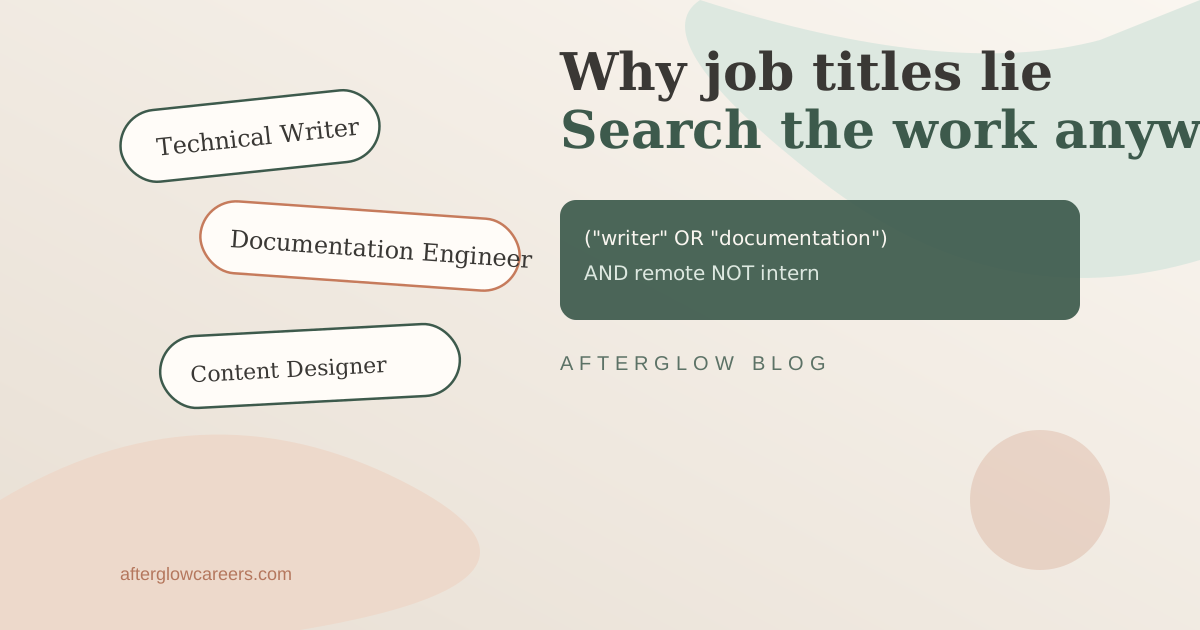
You search for Technical Writer.
You find a posting called Documentation Engineer.
The description reads like your exact job.
You apply.
Silence.
Or worse: a recruiter writes back and asks if you have built production APIs.
The title lied. Or your title lied. Or both.
Job titles are marketing, org-chart history, and compensation bands squeezed into two words. They were never a reliable map.
Why titles diverge from the work
Companies rename roles for many reasons:
- Recruiting trends (everyone wants "platform" in the title now)
- Internal leveling (Senior vs Staff vs Principal)
- Acquisitions (two teams, two naming systems)
- Scope creep (the job grew; the title did not)
LinkedIn's talent research has noted for years that the same work shows up under different titles across companies and industries, especially in tech and knowledge work.
Source: LinkedIn Talent Blog: Why job titles matter
That is not a bug in your search skills. It is the market.
The title trap in job boards
Most boards match on keywords in the title first, then the description.
So if you only search one title, you miss:
- Roles renamed for SEO
- Startups using founder-friendly titles
- Enterprises using HR-standard titles for the same work
Indeed's Hiring Lab publishes ongoing research on how job postings language shifts by sector. Titles move faster than job descriptions catch up.
Source: Indeed Hiring Lab
Your job is not to memorize every alias. It is to search like someone who knows the work, not just the label.
Build a title cluster, not a single title
Start from what you do, not what you were called.
Example for documentation work:
- Technical Writer
- Documentation Engineer
- Developer Content Engineer
- Information Developer
- Content Designer (technical)
Pick three you would accept, one you would consider, and one you will skip even if the pay looks good.
That last list matters. Title inflation can pull you into interviews for jobs you do not want.
Boolean search that survives title chaos
Google and most job boards support Boolean operators: AND, OR, NOT, and quotes for exact phrases.
Source: Google Search help: Boolean operators
A practical pattern:
“("technical writer" OR "documentation engineer" OR "developer content") AND (remote OR hybrid) NOT (intern OR "years of experience: 15")”
Break it into searches instead of one mega query:
- Search A: your strongest title + must-have skill
- Search B: alternate title + same skill
- Search C: skill-first (API documentation, runbooks, etc.) with title optional
Save each search. Run them weekly. Compare which clusters produce real fits.
Read the description, not the headline
When a title looks wrong, scan for:
- First three bullets (what you will actually do)
- Required tools (CMS, Git, ticket systems)
- Who you partner with (engineering, product, support)
- Words that signal level (own, lead, maintain, define)
If the title says Writer but the bullets say build internal developer platforms, believe the bullets.
When to stretch the title on your resume
You do not need to rename yourself every week.
You do need a headline and summary that speak the market's language.
If your official title was narrow but your work was broad, your resume can say:
“Technical Writer (documentation engineering scope: API reference, SDK guides, release notes)”
That is not lying. That is translation.
Match the translation to the posting you are applying for. One size fits nobody.
Use company context as a filter
Titles mean different things at different company sizes.
- Startup "Head of" might be a team of one
- Enterprise "Senior" might mean ten years and a committee
When you shortlist, note company stage and team size if you can find it. It beats guessing from the title alone.
How Afterglow handles title noise
Afterglow maps your resume to target titles and Boolean searches based on what you actually did, not only your last official title.
The free strategy gives you a starting cluster. Worth It? checks a specific posting against your background so you do not waste an evening on a title that looked close but was not.
Titles will keep lying. Your search system can still be honest.
Frequently asked questions
Should I apply if the title is wrong but the description fits?
Often yes, if the level and scope match.
Use the cover letter or a short note to name the alignment: "My work has been X; your posting describes X under a different title."
How many title variants should I track?
Start with three to five active targets.
Add more when you see patterns in good postings. Drop titles that keep sending you misfit interviews.
What if recruiters keep pitching wrong-level roles?
Tighten your search filters and your headline.
Send one polite correction template: "I am targeting IC documentation roles, not management." Consistency trains the algorithm and the humans.
Search the work, not the sticker
Job titles lie because they were never built for you. They were built for payroll, leveling, and LinkedIn scans.
You can still find the right rooms. Search in clusters, read the bullets, and keep a log of what actually fits.
That is slower than spraying one title everywhere. It is also how you stop feeling invisible in a broken system.